A Client Paid Before the Invoice Was Ready: How to Record It
A client paid before you sent the invoice? Record it as a deposit, give them a receipt, and apply it when the invoice is ready. Here’s how, with a worked example.
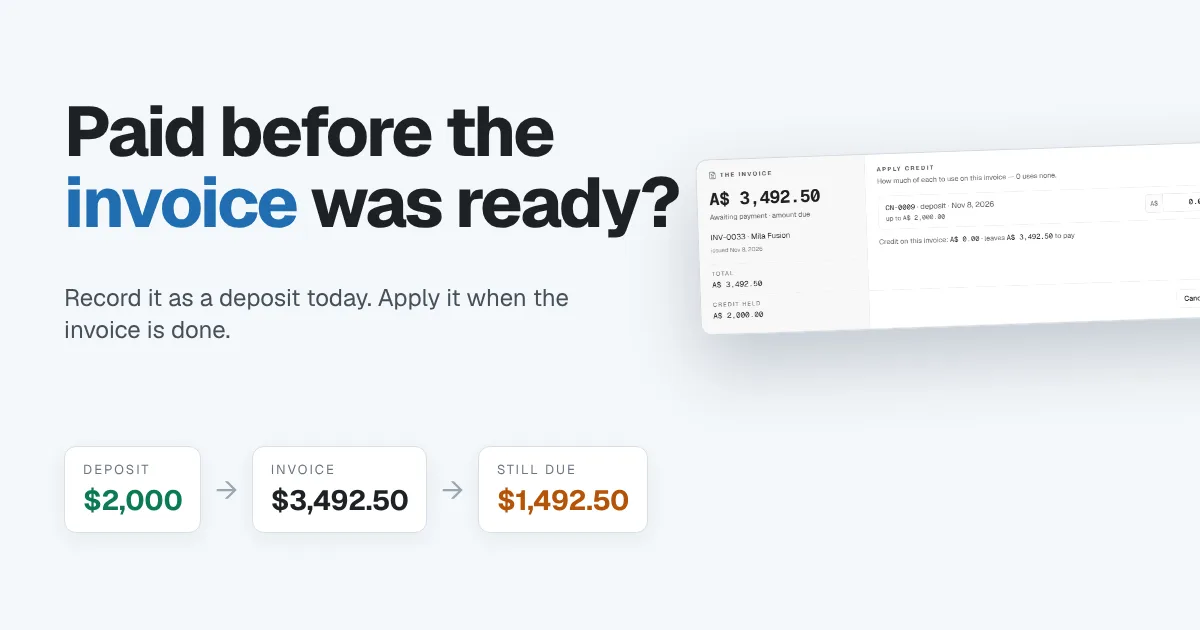
A client sends money before you've sent them anything. Maybe it's a deposit to lock in a date, maybe they just paid early, or maybe they guessed the amount and paid that. Now there's money in your bank account with no invoice to match it against, and it's tempting to either leave it alone or make up an invoice on the spot.
Neither is the right move. The money is real, so it needs recording today. But the sale isn't finished, so it isn't income yet. The clean way to handle it is to record the payment as a customer deposit, then apply it to the invoice when the work is done.
Why you can't just leave it
If you leave the payment unrecorded until the invoice exists, three things go wrong.
Your bank balance and your books disagree. When you reconcile, there's a payment with nothing behind it, and a few weeks later nobody remembers what it was for.
The client has no proof they paid. Someone who has handed over money before receiving an invoice usually wants a receipt, and they deserve one.
You risk charging them twice. When the invoice finally goes out for the full amount, it's easy to forget the earlier payment, and an automatic reminder may chase money they've already sent.
Why you shouldn't rush out an invoice either
The other shortcut is to raise an invoice for exactly what they paid and mark it paid. It makes the bank balance tidy, but it creates new problems.
The invoice doesn't describe the real job. If the final work comes to more or less than the deposit, you're left with a second invoice, a credit note, or both, to fix a document that shouldn't have existed.
It can also bring income forward. An invoice usually tells your books the sale has happened. If the work is weeks away, your reports show money as earned before you've earned it.
Record it as a deposit, then apply it
A customer deposit, sometimes called a prepayment or customer credit, sits in between. It records that the money arrived and who it came from, without pretending the sale is complete.
In double-entry terms, the money goes into your bank account and an equal amount goes into a liability, often named "customer deposits" or "unearned revenue". It's a liability because, until you deliver, you owe the client either the work or their money back.
When the invoice is ready, you apply the deposit to it. The deposit clears, the invoice shows it as already paid, and only the difference is left to collect. You only ever record the payment once.
A worked example
An electrician quotes a client for fifteen ceiling fans plus labor. The client sends a $2,000 deposit before the job starts.
| Step | What happens | Amount |
|---|---|---|
| 1 | Deposit arrives and is recorded against the client | $2,000.00 held as credit |
| 2 | Job finishes and the invoice is issued | $3,492.50 total |
| 3 | Deposit is applied to the invoice | −$2,000.00 |
| 4 | Left for the client to pay | $1,492.50 |
The client gets a receipt on the day they pay. The invoice they receive later shows the full price, the deposit taken off, and the amount still due, so there's nothing to explain and nothing to argue about.
What if they paid more than the invoice?
Sometimes the client pays a round number and the job comes in lower. Say they sent $1,000 and the invoice is $850.
Apply $850 to the invoice. It's now paid in full, and the remaining $150 stays on the client's account as credit. You can apply it to their next invoice, or refund it if they ask. Either way, write down which. Credit that sits on an account for months is easy to forget, and the client won't.
What if the job never happens?
If the work is cancelled, the deposit is still the client's money unless your terms say otherwise. Refund it, or keep it only if your written terms clearly allow a non-refundable deposit and the client agreed to them. That's a good reason to put your deposit terms on the quote before you take any money.
A note on tax
How sales tax, VAT or GST applies to a deposit depends on where you are and what kind of deposit it is. In some places tax is due when a payment is received, even before the invoice. In others, a refundable security deposit isn't taxed until it's kept. Check the rule for your country with your accountant before you rely on either approach.
How Papertools handles a payment before the invoice
In Papertools, a payment that arrives before the invoice is recorded as a deposit. Go to Money-In → Credit notes, choose New, then Record a deposit. Pick the client, enter the amount, choose the account it was paid into and the date it arrived. You can add a line about what it's for, which prints on the client's receipt, and a private note only your team sees.
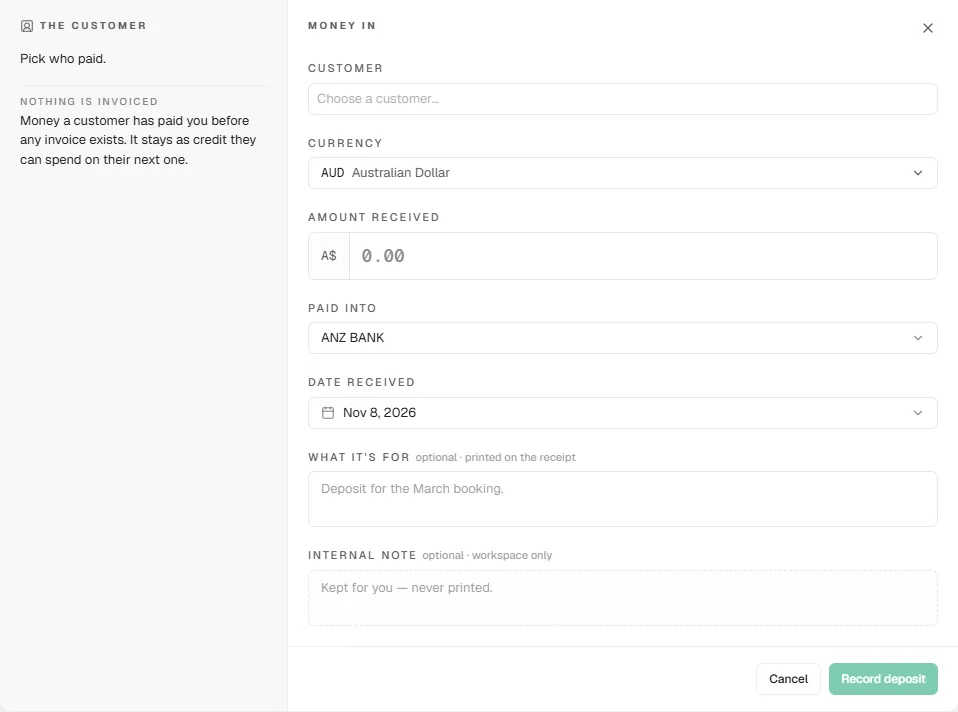
The deposit is saved as credit held on the client's account. It stays there, marked as paid in advance, until you use it. In the background, Papertools keeps it in a customer deposits account, not in your sales, so your profit isn't overstated while the work is still to come.
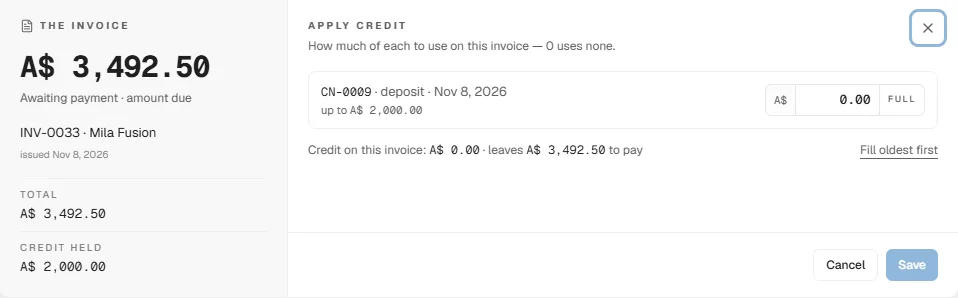
When the invoice is ready, open it and choose Apply credit. Papertools shows every deposit the client holds and how much is available on each. Enter the amount to use, or choose Full to apply all of it.
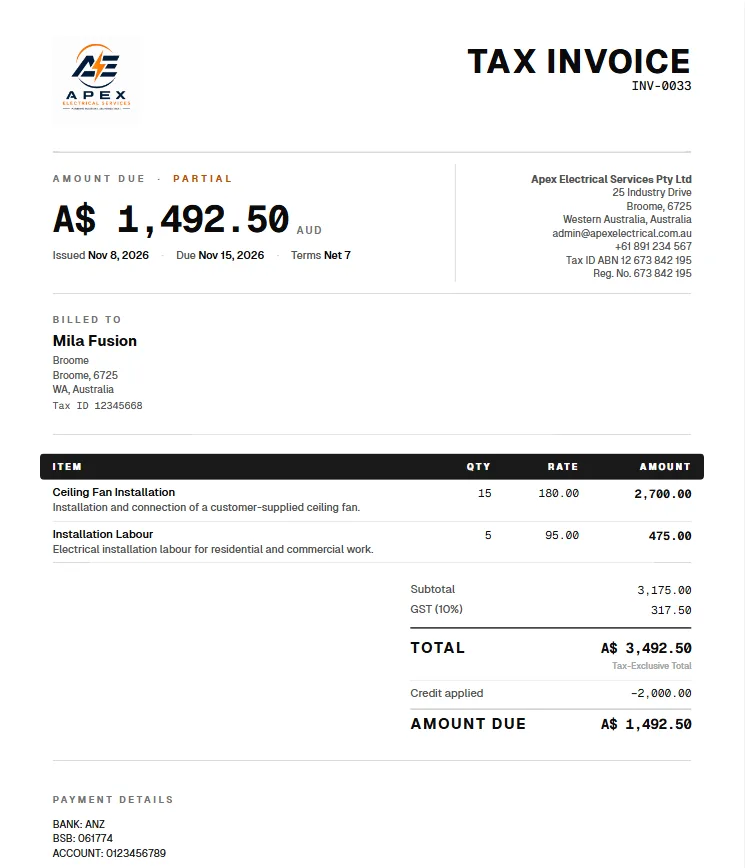
Once it's applied, the invoice shows the credit and the amount still due. The client sees exactly the same thing on their copy.
If the client paid more than the invoice, apply only what's needed. The rest stays on their account for next time.
You can start free with Papertools. The Essential plan is free forever, with no credit card.
What this won't fix
- Your deposit terms. Papertools records the money. Whether a deposit is refundable, and when, is up to the terms you agree with the client.
- Tax timing. The tax treatment of deposits differs by country and by type of deposit. Confirm it with your accountant.
- Money you can't identify. If you can't tell who sent a payment, find out before recording it as anyone's deposit.
Quick answers
Is a customer deposit income? Not yet. Until you deliver the work, it's money you're holding for the client. It becomes income when you invoice and apply it.
Should I send a receipt for a deposit? Yes. A receipt confirms the date and amount, and gives the client proof they paid before any invoice existed.
What if the invoice is less than the deposit? Apply what's needed to pay the invoice in full. The rest stays as credit for the client's next job, or you refund it.
Can I apply one deposit across more than one invoice? Yes. Apply part of it to one invoice and keep the rest as credit for the next, as long as the total you apply doesn't go over what the client paid.
What if the job is cancelled? Refund the deposit, unless your written terms say it's non-refundable and the client agreed to them.
Where to go next
- What to do when a client won't pay an invoice: the opposite problem, and when to use a credit note or write-off
- Estimate, invoice, or receipt? Which document to send and when: where a deposit receipt fits alongside the other documents
- How to get clients to pay invoices on time: why taking a deposit is one of the simplest ways to get paid
- Record a manual or partial payment: the Help guide for payments that arrive after the invoice
- How to Track Partial Payments Across Multiple Projects (and Send One Statement): when one client pays in pieces across several jobs
- How to follow up on a quote: getting the yes before the deposit
This article is general information about how bookkeeping works, not tax, accounting or legal advice. Rules differ by country and business. Check with a qualified adviser before acting on anything here. Papertools gives you the figures; the decisions stay with you.